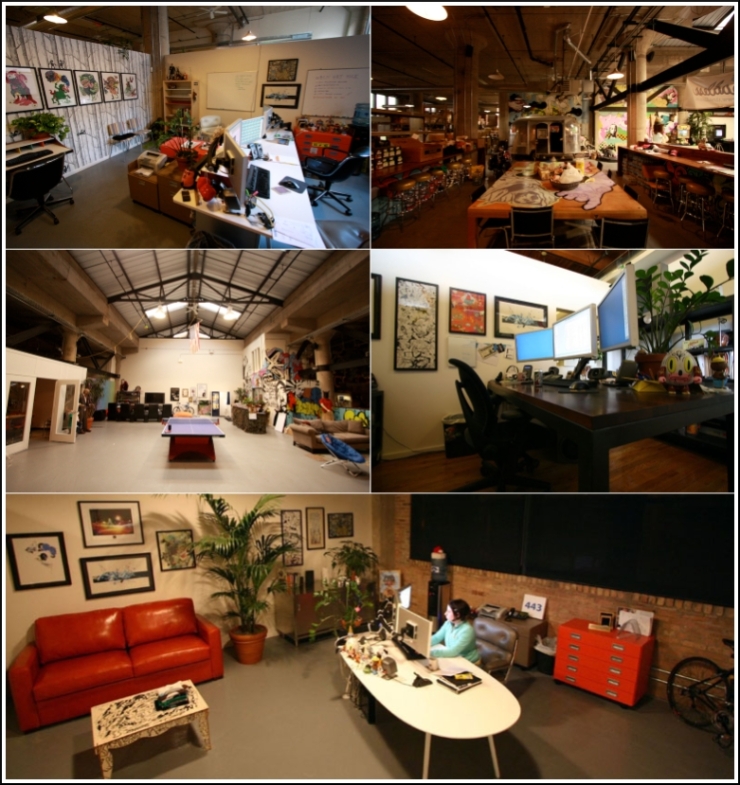
Yes, that is where people go to "work" every day. Not too shabby. The interior decoration of the Threadless offices reflect perfectly what the company stands for: spreading artistic and creative designs to society through everyday objects, like t-shirts. Their offices are conducive to this mind-set: free-form and limitless, allowing creativity to flow freely.
How might these interior designs be considered utopian? Because their purpose is simple: to make the employees happy, comfortable, and productive. Though the offices only affect a few people directly (the workers), the interior design motivates the employees to contribute positively to society (by exposing people to art), therefore making society better.
Sure, this is a very specific example of a utopian design, but the idea is universal: motivating people to do fun and creative things helps build a happier society.

No comments:
Post a Comment